
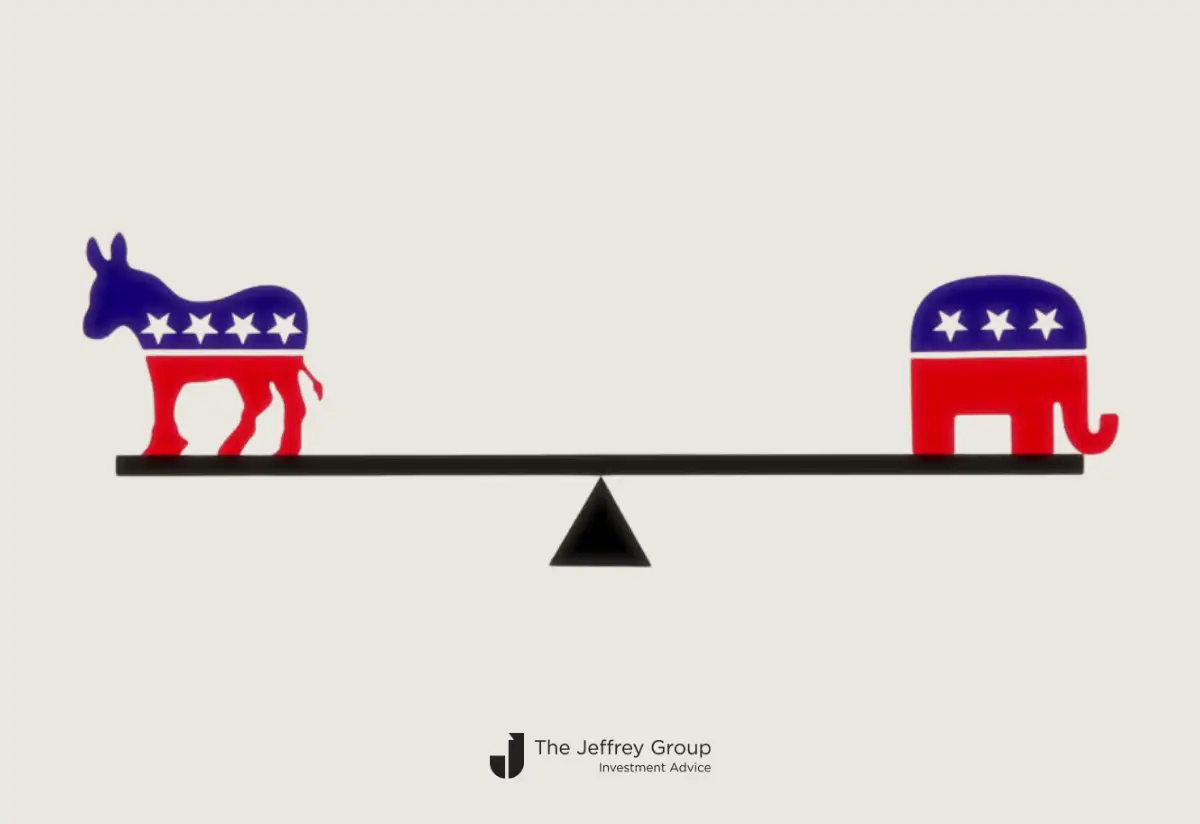
When voters divide power in Washington, investors often hear a familiar argument: gridlock is good for the market because it makes major policy changes harder to pass.
By Jeff Herman
There’s a reasonable idea behind that view. A divided government may make sweeping changes less likely in the near term. But the historical record doesn’t show that gridlock guarantees better returns.
Since 1974, the S&P 500 has averaged a 12.4% return in the six months following a midterm election, with positive returns in all 13 periods studied by the Schwab Center for Financial Research.
That’s a small historical sample, and it doesn’t establish that gridlock produced those returns. It does suggest that the months after an election have often been stronger than the uncertainty beforehand.
That doesn’t mean policy has no effect on businesses or the economy. Tax, trade, and regulatory decisions are certainly important. But markets respond to many forces at once, and investors can’t know in advance which proposals will become law, how companies will adapt, or what expectations are already reflected in stock prices.
So, is gridlock good for the market? It may limit some policy changes, but it can also bring budget disputes, delayed decisions, and its own uncertainty. History doesn’t offer a reliable “gridlock premium” investors can use to time their portfolios.
Rather than betting on which political arrangement will best serve stocks, investors can focus on their financial plan: what the money is for, when they may need it, and how much risk is appropriate.
The political climate can make election season feel especially charged. But investment decisions made in the heat of the moment can pull you away from your goals. If the midterms have you considering a major change, or keeping money on the sideline, speak with your financial advisor before acting.
History offers perspective, not a forecast.