A Practical Retirement Planning Guide for Building, Managing, and Turning Your Savings Into Long-Term Income
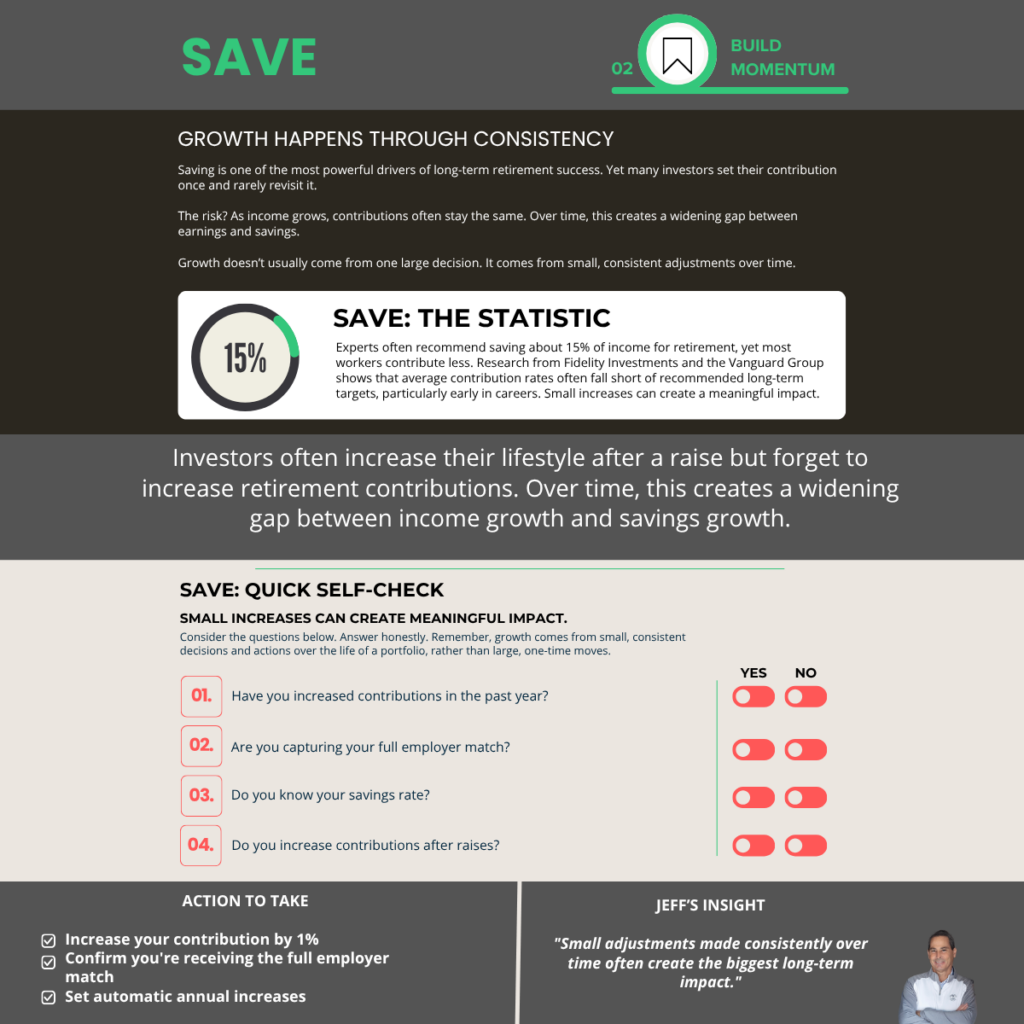
Many people open a 401(k), set a contribution percentage, select investments, and assume the strategy will largely take care of itself over time. But successful retirement planning rarely works that way.
A strategic 401(k) requires decisions that change throughout your life and career. From opening your first account to eventually generating retirement income and passing assets along to your heirs, each stage introduces new opportunities, risks, and considerations that can significantly impact long-term outcomes.
The challenge is that many investors adopt a “set it and forget it” mentality, only revisiting their strategy when retirement is suddenly much closer. After years of automatic contributions and market growth, people often look up and ask:
“What now?”
That’s where gaps in planning and missed opportunities begin to surface.
This guide was designed to help investors think about a 401(k) not simply as a retirement account, but as an ongoing financial strategy that should evolve alongside your career, goals, income, and future retirement needs. Along the way, contribution strategies, allocation decisions, portfolio monitoring, retirement income planning, tax considerations, and legacy preparation all become increasingly important.
At The Jeffrey Group, we work with clients to make thoughtful adjustments over time that help improve long-term financial outcomes and strengthen retirement confidence.
Whether you recently opened your first 401(k), started a new job, received a promotion, or are beginning to think more seriously about retirement income, this guide is designed to help you better understand the decisions and actions that can shape your financial future over time.
FILL OUT THE FORM BELOW TO DOWNLOAD OUR GUIDE, HOW TO GET THE MOST OUT OF YOUR 401(k).